Is AI voice cloning legal?
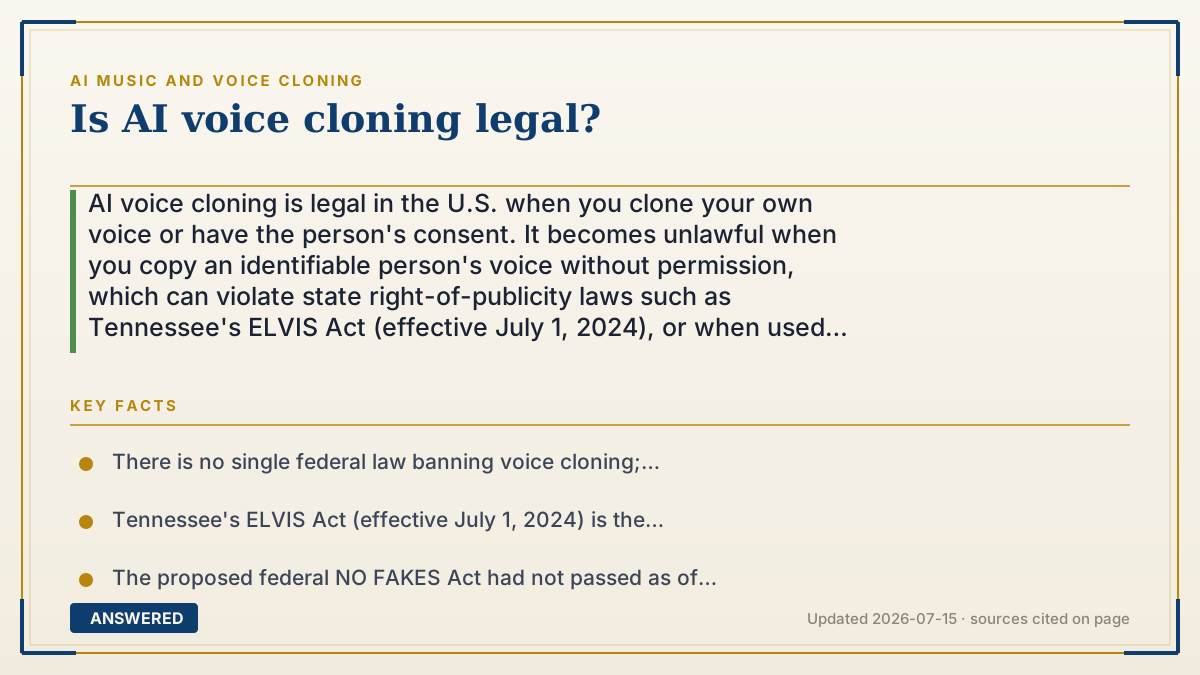
AI voice cloning is legal in the U.S. when you clone your own voice or have the person's consent. It becomes unlawful when you copy an identifiable person's voice without permission, which can violate state right-of-publicity laws such as Tennessee's ELVIS Act (effective July 1, 2024), or when used for fraud or defamation. This is general information, not legal advice.
Why — the first-principles explanation
There is no single federal 'voice cloning' law, so legality is judged by what you do with the clone, under several existing bodies of law. The technology itself is neutral, like a camera; the act determines the offense.
The most important area is the right of publicity — a person's right to control commercial use of their identity, including their voice. This is mostly state law, and it is expanding fast to cover AI. Tennessee's ELVIS Act, effective July 1, 2024, was the first to explicitly protect a person's voice from unauthorized AI replication, and states like California and New York have added similar rules. A proposed federal NO FAKES Act would create a nationwide version, but it has not passed as of 2026-07.
Beyond publicity, other laws bite depending on use. Cloning a voice to defraud (the FTC-documented family-emergency scam), impersonate, defame, or make deepfake harassment can trigger fraud, impersonation, or harassment statutes regardless of consent details. Copyright is a smaller factor here: a voice itself is not copyrighted, though the specific recording you train on may be. Bottom line: consent and honest use are what keep cloning on the right side of the line.
An example that makes it click
Think of voice cloning like using someone's signature. Signing your own name — always fine. Signing your friend's name because they asked you to sign the birthday card — fine. Forging a stranger's signature on a check — that's fraud, and forging a famous person's autograph to sell — that's stealing their identity. The pen is legal; what you write with it decides whether you broke the law.
How to do it
- Clone only your own voice, or get clear written consent from the person before cloning theirs.
- Avoid cloning any identifiable real person (especially celebrities) without a signed release — right-of-publicity laws apply.
- Never use a clone to impersonate, defraud, defame, or harass — those are illegal regardless of consent.
- Keep records of consent and of the audio you trained on, in case the source recording is copyrighted.
- For any commercial project, consult a qualified attorney about your specific state's rules.
Key facts
- There is no single federal law banning voice cloning; legality depends on use and on state right-of-publicity laws.
- Tennessee's ELVIS Act (effective July 1, 2024) is the first U.S. law explicitly protecting a person's voice from AI cloning.
- The proposed federal NO FAKES Act had not passed as of 2026-07.
- Using a cloned voice for fraud is illegal; the FTC documents voice-clone family-emergency scams.
- Cloning your own voice, or with the person's consent, is generally lawful.
Choosing a tool for your creative workflow?
The answer above explains the concept; this next step helps you choose by job, limits and current terms.
▶ The 60-second explainer (script)
Is AI voice cloning legal? Yes, when you do it right, and illegal when you don't. There's no single federal ban, so it comes down to consent and how you use the clone. Cloning your own voice is fine. Cloning someone else's voice with their permission is fine. But copying a real person's voice without consent can violate right-of-publicity laws — Tennessee's ELVIS Act, effective July 2024, was the first to specifically protect voices from AI cloning, and more states are following. On top of that, using a clone to scam, impersonate, or defame someone is illegal no matter what. A proposed federal law called the NO FAKES Act would create nationwide rules, but it hasn't passed yet. This is general information, not legal advice — for a real project, talk to a lawyer.
What authoritative sources say
People also ask
Is it legal to clone my own voice?
Yes. You control the rights to your own voice, so cloning it for your own projects is generally lawful.
What law protects a person's voice from cloning?
State right-of-publicity laws. Tennessee's ELVIS Act, effective July 1, 2024, was the first to explicitly cover AI voice clones.
Is there a federal voice-cloning law?
Not yet. The proposed NO FAKES Act would create one, but it had not passed as of 2026-07.
Can I clone a voice for a parody?
Parody may have some protection, but right-of-publicity and defamation risks remain. Get legal advice before publishing.
The same question, asked other ways
- What are the laws on AI voice cloning?