Should AI be used in schools?
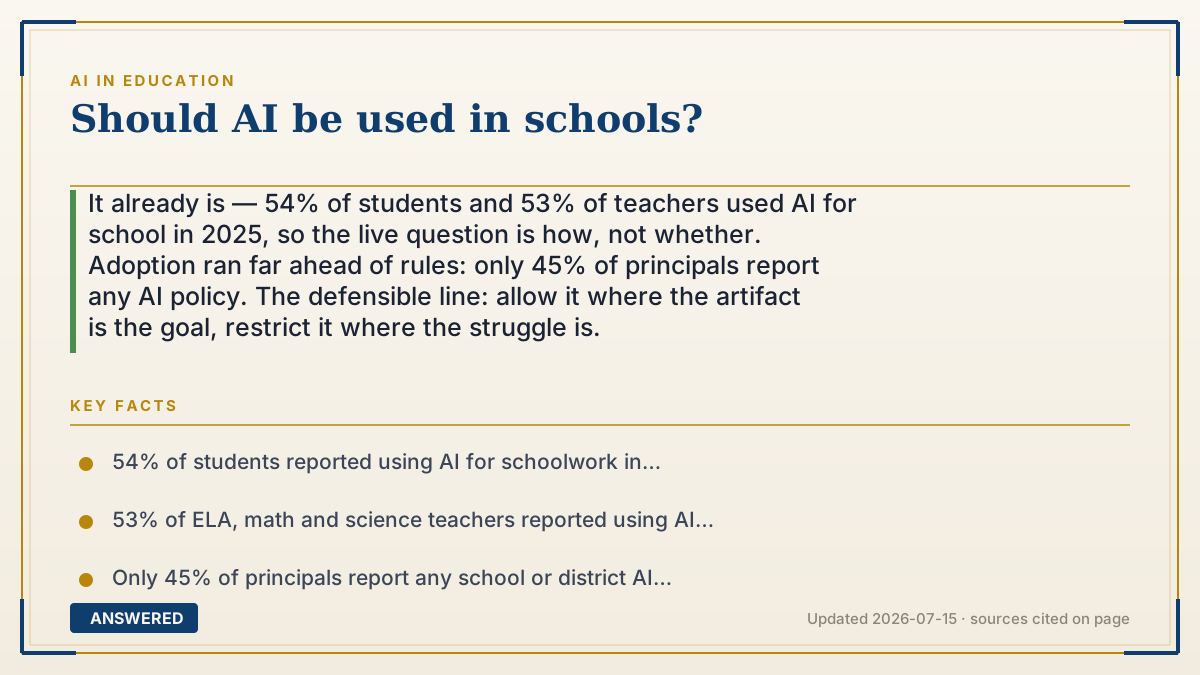
It already is — 54% of students and 53% of teachers used AI for school in 2025, so the live question is how, not whether. Adoption ran far ahead of rules: only 45% of principals report any AI policy. The defensible line: allow it where the artifact is the goal, restrict it where the struggle is.
Why — the first-principles explanation
"Should" implies a decision still pending. It isn't. RAND's 2025 surveys found 54% of students using AI for schoolwork (61% of high schoolers) and 53% of teachers using it for planning and instruction. The vote happened without a ballot. What remains genuinely open is narrower and more useful: what is allowed, for what, and who gets taught.
That reframing matters because outright prohibition is not actually on the menu. A ban requires enforcement, and enforcement rests on detection — which fails in a specific, unfair direction. Seven detectors falsely flagged 61.22% of essays by non-native English writers in the Patterns study, while a single rewrite prompt cut detection of real AI essays to 13%. A ban enforced by that machinery doesn't stop cheating; it punishes ESL students and misses the cheaters. A rule you cannot enforce evenly is worse than a rule you state plainly.
The honest case on each side. For: teacher labor is a real bottleneck — prep, differentiation, and feedback consume hours that don't reach students, and tools that compress them return time. Against: what school produces is cognitive capacity, and capacity is built by struggle. Offloading the struggle may quietly reduce the thing you were paying for. Notably, 61% of parents and 55% of high schoolers agreed greater AI use will harm critical thinking, versus only 22% of district leaders. That's an unusual pattern worth sitting with: the users are more worried than the buyers.
And here's what the evidence does not support — in either direction. We have solid adoption and attitude data. We do not have strong causal evidence on learning outcomes at scale. Vendor claims exist (MagicSchool advertises a "28% improvement in students meeting literacy grade-level expectations") but a company's own effect size, published without methodology, sample, or control group, is marketing until someone independent replicates it. Anyone telling you the learning research is settled — pro or con — is ahead of the data.
So the position the evidence actually licenses is about where struggle is the point. Use AI where the artifact is the goal: a teacher's worksheet, a translated letter home, a first-draft rubric. Restrict it where the effort is the goal: learning to build a paragraph, to work a proof, to sit with a hard problem. That line doesn't require predicting anything about the technology — it only requires knowing what a given assignment was for. And it needs to be written down, which for most schools it still isn't.
An example that makes it click
Schools already solved this once, with calculators. They didn't ban them and they didn't hand one to every third grader. They drew a line: no calculator while you're learning what multiplication is; calculator once you're doing physics and the arithmetic is no longer the lesson.
That compromise took about twenty years of arguing, and nobody now thinks it was cowardice. It was the right answer — allow the tool where the tool isn't the skill. AI needs the same line drawn, on the same principle, considerably faster. The difference is that calculators only threatened arithmetic. AI's blast radius is every assignment that involves producing words.
Key facts
- 54% of students reported using AI for schoolwork in winter 2025 (61% of high schoolers, 41% of middle schoolers); 21% use it at least weekly (RAND)
- 53% of ELA, math and science teachers reported using AI for instructional planning or teaching in 2025
- Only 45% of principals report any school or district AI policy or guidance; only 35% of district leaders provide students any AI training, and just 3% at the elementary level
- 61% of parents and 55% of high schoolers agreed greater AI use will harm critical-thinking skills, versus only 22% of district leaders
- AI detectors falsely flagged 61.22% of essays by non-native English writers (Patterns, 2023), making even-handed enforcement of a ban impractical
- MagicSchool advertises a "28% improvement in students meeting literacy grade-level expectations" — a vendor marketing claim published without methodology or control group, not independently replicated
▶ The 60-second explainer (script)
Should AI be used in schools? That question is already closed. In 2025, fifty-four percent of students and fifty-three percent of teachers used AI for school. The vote happened without a ballot. So the real question is what's allowed, for what, and who gets taught. And notice: banning it isn't actually available. A ban needs enforcement, enforcement needs detection, and detection fails in a specific direction — seven detectors falsely flagged sixty-one percent of essays by non-native English speakers, while one rewrite prompt dropped detection of real AI essays to thirteen percent. So a ban punishes your ESL kids and misses the cheaters. That's worse than a clear rule. Here's the honest state of evidence. For: teacher time is a real bottleneck, and AI eats the paperwork. Against: school produces thinking, and thinking is built by struggle. Interesting detail — sixty-one percent of parents and fifty-five percent of high schoolers think AI harms critical thinking. Only twenty-two percent of district leaders agree. The students are more worried than the administrators. What we don't have is causal evidence on learning outcomes. Vendor claims exist, but a company's own number with no control group is marketing. Anyone who tells you the research is settled, either way, is ahead of the data. Schools solved this before with calculators: not while you're learning arithmetic, yes once you're doing physics. Allow the tool where the tool isn't the skill. Then write it down — most schools still haven't.
What authoritative sources say
People also ask
Can schools just ban AI?
They can write the rule, but they can't enforce it fairly. Enforcement depends on detectors that falsely flag 61.22% of non-native English writers while missing AI text that's been rewritten once. An unenforceable ban mostly punishes the wrong students.
Does AI actually improve learning?
No one credibly knows yet. We have strong adoption data and attitude surveys, but not strong causal evidence on learning outcomes at scale. Vendor-published effect sizes lack methodology and controls and shouldn't be treated as findings.
What's a defensible policy?
Allow AI where the output is the goal — lesson materials, translations, first-draft rubrics. Restrict it where the effort is the goal — learning to write a paragraph or work a proof. Then put it in writing; only 45% of principals have anything written at all.
Are students themselves in favor?
Not uniformly. 55% of high schoolers agreed that greater AI use will harm critical thinking — a higher share than among district leaders (22%). Students are using it and worrying about it at the same time.