What are the different types of AI?
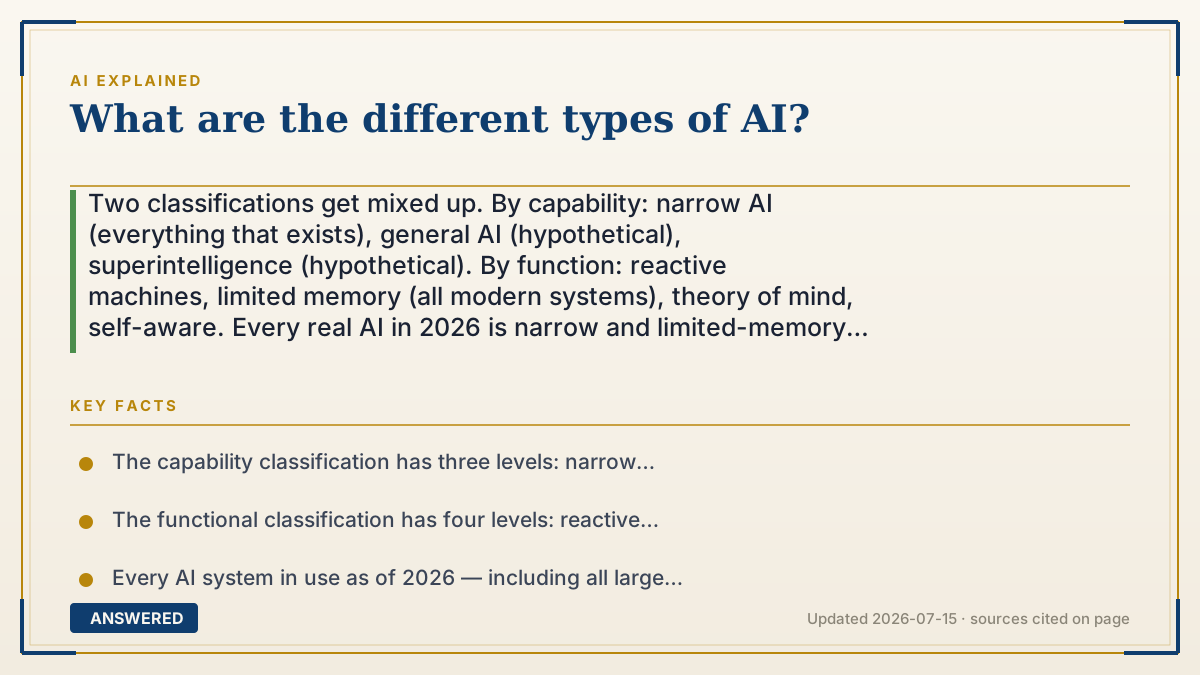
Two classifications get mixed up. By capability: narrow AI (everything that exists), general AI (hypothetical), superintelligence (hypothetical). By function: reactive machines, limited memory (all modern systems), theory of mind, self-aware. Every real AI in 2026 is narrow and limited-memory. The other categories are philosophy, not products.
Why — the first-principles explanation
Almost every "types of AI" article presents a tidy four-level ladder — reactive machines, limited memory, theory of mind, self-aware — and neglects to mention that the bottom two are the entire industry and the top two don't exist. That's not a minor footnote. It's the most important fact about the taxonomy, and leaving it out makes the list read like a roadmap when it's really a wish list.
Here's the useful version. The capability axis asks how broad the system is. Narrow AI does one class of task — this is 100% of AI that has ever existed, including every system that feels general. General AI (AGI) would match human flexibility across arbitrary domains; it's a research goal with no agreed definition or timeline. Superintelligence would exceed us broadly; it's a philosophical category.
The functional axis asks what the system does with time and other minds. Reactive machines have no memory and respond only to the present input — Deep Blue never learned anything between moves. Limited memory systems use recent data within a defined window; this covers every modern model, including the one you're reading. Theory of mind would model other agents' beliefs and intentions as genuinely separate from its own. Self-aware systems would have subjective experience. Those last two are not near-term engineering. They're open problems in philosophy where we can't even specify a test.
The part worth internalizing is why "limited memory" is such an unglamorous name for something so capable. It means the system has no persistent self across time. A language model's weights are frozen after training; within a conversation it works from what's in its context window, and when that ends, it's gone. It doesn't remember you. It didn't learn from your last chat. That's why a chatbot can discuss quantum mechanics and then fail to recall your name from an hour ago — those look like contradictory abilities only if you assume it's a mind. It isn't. It's an extraordinarily good function, recomputed fresh each time.
And this taxonomy is genuinely old. The founding 1955 Dartmouth proposal already contained the field's whole ambition in one sentence: "every aspect of learning or any other feature of intelligence can in principle be so precisely described that a machine can be made to simulate it." Seventy years on, we've built spectacular narrow systems and haven't settled that bet. Any list implying we're climbing rungs toward self-awareness is selling a story. We're extremely good at rung two.
An example that makes it click
Think about a calculator, a chess computer, and a chess grandmaster.
The calculator answers what's in front of it and forgets instantly — reactive. The chess computer looks at recent moves and plans ahead, but shut it off and it has no history with you; next game, you're a stranger. That's limited memory, and it's where every AI you've used lives. The grandmaster is different in kind: she remembers your last game, notices you always overplay the queenside, senses you're nervous today, and adjusts. She's modeling you — theory of mind. Nothing we've built does that.
And the grandmaster also knows what it feels like to lose. That's self-awareness, and it's not on any engineering schedule. So when a chatbot sounds like the grandmaster, remember: it's a spectacularly good chess computer that has read every book about being a grandmaster. Every conversation, it starts as a stranger again.
Key facts
- The capability classification has three levels: narrow AI (all existing systems), artificial general intelligence (hypothetical, no agreed definition or timeline), and superintelligence (hypothetical).
- The functional classification has four levels: reactive machines, limited memory, theory of mind, and self-aware. Only the first two exist.
- Every AI system in use as of 2026 — including all large language models — is narrow and limited-memory.
- Reactive machines have no memory of past inputs; IBM's Deep Blue evaluated board positions without learning between moves.
- Limited memory means model weights are frozen after training and the system works only from what is in its context window, with no persistent identity across sessions.
- Theory of mind and self-aware AI are philosophical categories, not engineering roadmaps — there is no agreed test for either.
- The field's founding conjecture, from the 31 August 1955 Dartmouth proposal, was 'that every aspect of learning or any other feature of intelligence can in principle be so precisely described that a machine can be made to simulate it' — still unresolved seventy years later.
- A separate technical distinction cuts across both schemes: machine learning is a subset of AI, deep learning a subset of machine learning, and generative AI an application of deep learning.
▶ The 60-second explainer (script)
What are the different types of AI? There are two different classifications and everyone mixes them up. By capability: narrow AI, general AI, superintelligence. By function: reactive machines, limited memory, theory of mind, self-aware. Now here's what almost every article leaves out, and it's the most important thing on this page. The bottom two rungs are the entire industry. The top two don't exist. Not 'coming soon' — don't exist. Leaving that out makes the list look like a roadmap when it's actually a wish list. So: narrow AI does one class of task. That's a hundred percent of AI ever built, including every system that feels general to you. General AI would match human flexibility across any domain — it's a research goal with no agreed definition and no timeline. Superintelligence is a philosophical category. On the functional side: reactive machines have no memory at all. Deep Blue never learned a thing between moves. Limited memory systems use recent data inside a defined window — that's every modern model, including the one you're talking to. Theory of mind would mean modeling other minds' beliefs as separate from its own. Self-aware would mean subjective experience. Those two aren't engineering problems yet. We can't even specify a test. And here's what's worth actually internalizing: why 'limited memory' is such an unglamorous name for something so impressive. It means there's no persistent self across time. The weights freeze after training. Inside a conversation it works from its context window — and when that ends, it's gone. It doesn't remember you. It didn't learn from your last chat. That's why a chatbot can discuss quantum mechanics and then not recall your name from an hour ago. Those only look contradictory if you assume it's a mind. It isn't. It's an extraordinary function, recomputed fresh every time. Think of a calculator, a chess computer, and a grandmaster. The calculator forgets instantly. The chess computer plans ahead brilliantly but next game you're a stranger — that's where all AI lives. The grandmaster remembers your last game, notices you overplay the queenside, sees you're nervous today. She's modeling YOU. Nothing we've built does that. And she knows what losing feels like. That's not on anybody's schedule.
What authoritative sources say
People also ask
What type of AI is ChatGPT?
Narrow and limited-memory. It handles one class of task — producing text — and works only from what's in its context window. It has no persistent memory of you across sessions and doesn't learn from your conversations.
Does artificial general intelligence exist?
No. AGI would match human flexibility across arbitrary domains. It has no agreed definition, no agreed test, and no reliable timeline. Every system that exists today is narrow, however general it feels.
What's the difference between AI, machine learning, and deep learning?
Nested sets. AI is the broad goal; machine learning is the subset that learns from data instead of hand-written rules; deep learning is the subset of ML using many-layered neural networks; generative AI is an application of deep learning.
Are any AI systems self-aware?
No, and it isn't a near-term engineering question. Self-awareness would mean subjective experience, and we have no agreed way to test for it even in principle. It's a philosophical category on this list, not a product tier.
Why does the AI forget my name but know quantum physics?
Because it's limited-memory. Physics is baked into frozen weights from training. Your name only lives in the current context window — when that ends, it's gone. It's a function recomputed fresh, not a mind.