What is NotebookLM used for?
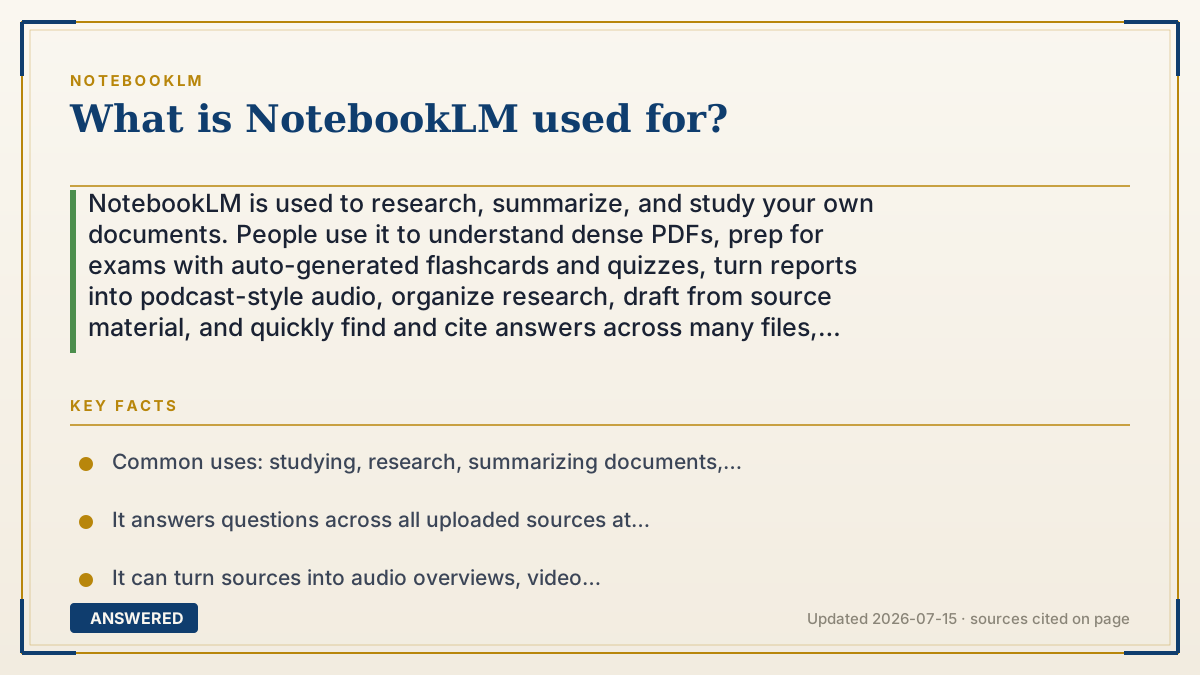
NotebookLM is used to research, summarize, and study your own documents. People use it to understand dense PDFs, prep for exams with auto-generated flashcards and quizzes, turn reports into podcast-style audio, organize research, draft from source material, and quickly find and cite answers across many files, all grounded in the sources you upload.
Why — the first-principles explanation
The core job NotebookLM does is compressing and reorganizing information you already have but don't have time to fully read. Because it is grounded in your uploaded sources and cites them, it is trustworthy for tasks where accuracy to a specific document matters, unlike a general chatbot that answers from the whole web.
This makes it useful anywhere you face a stack of material and a deadline. Students turn readings into study guides and quizzes. Researchers and analysts ask questions across dozens of papers or reports and get cited answers. Professionals summarize contracts, manuals, or meeting notes and draft new documents from them.
The common thread is that you supply the trusted source material and NotebookLM handles the reading, connecting, and repackaging. Its output formats, chat answers, summaries, audio and video overviews, mind maps, flashcards, quizzes, are just different ways to consume the same underlying sources depending on whether you want to read, listen, or test yourself.
An example that makes it click
Think of a new employee's first week. Their manager dumps a folder of manuals, past reports, and policy PDFs and says, 'Get up to speed.' Instead of reading all weekend, they load it into NotebookLM and ask, 'What are the top five things I need to know?' It answers in seconds, citing each manual.
The next day they generate a quick audio overview and listen on their commute. Same folder, three different uses: search, summary, and study, all from documents they were handed.
Key facts
- Common uses: studying, research, summarizing documents, and drafting from sources.
- It answers questions across all uploaded sources at once, with citations.
- It can turn sources into audio overviews, video overviews, mind maps, flashcards, and quizzes.
- Free accounts allow 50 sources per notebook, each up to 500,000 words.
- It is used by students, researchers, writers, and professionals reviewing dense material.
Open the official product site and confirm the current access, plans and terms.
▶ The 60-second explainer (script)
What is NotebookLM actually used for? In short, it helps you understand and reuse your own documents faster. Say you have a huge stack of material, textbook chapters, research papers, work reports, meeting notes. NotebookLM reads all of it in seconds and lets you ask questions across everything at once, with citations so you can trust the answers. Students use it to turn readings into study guides, flashcards, and quizzes for exam prep. Researchers use it to query dozens of papers and get cited summaries. Professionals use it to digest contracts and manuals, then draft new documents from them. And anyone can turn their sources into a podcast-style audio overview to review hands-free. The pattern is always the same: you supply the trusted documents, and NotebookLM reads, connects, and repackages them, whether you want to read the answer, listen to it, or test yourself on it.
What authoritative sources say
People also ask
Is NotebookLM good for work or just school?
Both. Professionals use it to summarize contracts, manuals, and reports; students use it to study and prep for exams.
Can it write new content?
Yes. It can draft summaries, outlines, and documents based on your uploaded sources, with citations.
Can it handle many documents at once?
Yes. It answers across all sources in a notebook, up to 50 per notebook on the free plan.
What is it not good for?
It is not meant for open-ended web research; it only uses the sources you upload, so it won't answer beyond them.