What is quantum AI?
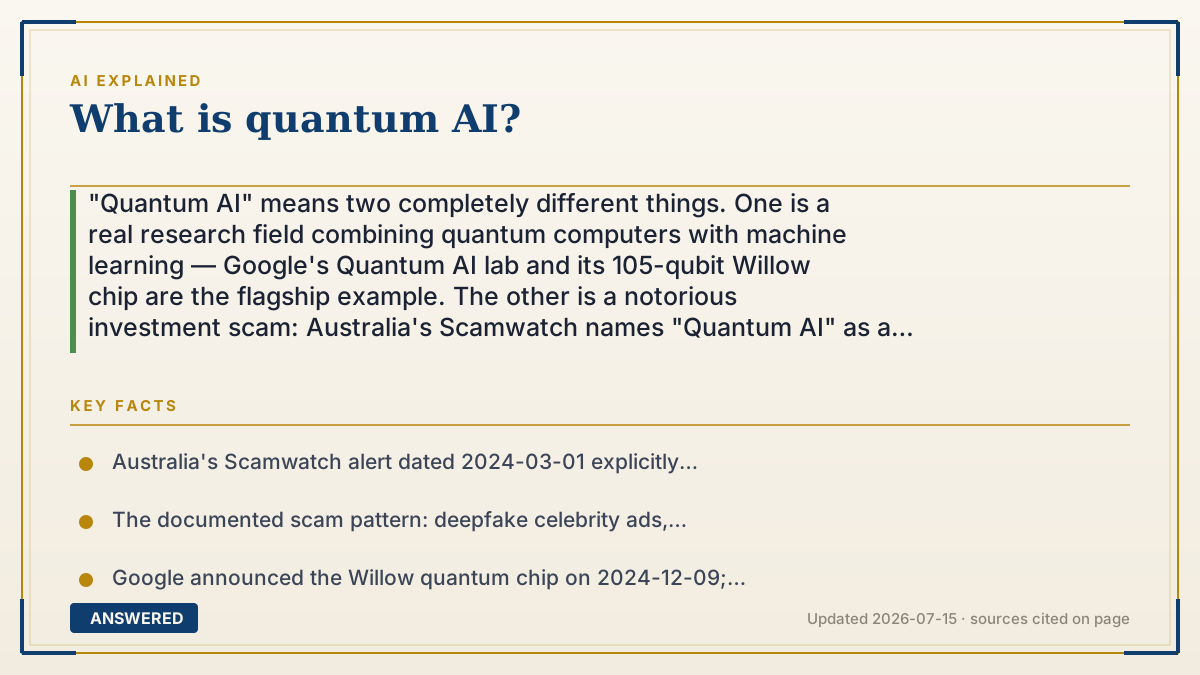
"Quantum AI" means two completely different things. One is a real research field combining quantum computers with machine learning — Google's Quantum AI lab and its 105-qubit Willow chip are the flagship example. The other is a notorious investment scam: Australia's Scamwatch names "Quantum AI" as a fake trading platform that uses deepfaked celebrities and asks for a $250 deposit.
Why — the first-principles explanation
Start with the real science. A normal computer bit is 0 or 1. A qubit can hold a blend of both at once, and qubits can be entangled so their states depend on each other. That lets a quantum computer explore many possible answers in parallel in a way a classical machine cannot. Since machine learning is largely about searching enormous spaces of possible patterns, people naturally asked: could quantum hardware speed that up? That question is the entire legitimate field of quantum AI.
The honest status as of 2026-07 is: promising, unproven, and not in your life yet. Google announced Willow in December 2024 — 105 qubits, and it finished a benchmark called random circuit sampling in under five minutes that Google estimated would take a leading supercomputer around 10 septillion years. That number is stunning, but read the fine print: random circuit sampling was chosen because quantum computers are good at it, not because anyone needs it. Google's own stated next goal is a first useful beyond-classical computation. The bottleneck is errors — qubits are fragile, and Willow's real achievement was showing error rates drop as you add more qubits, which is the thing you need before any of this scales.
Now the scam, because it's the reason most people are searching. Fraudsters picked the words "Quantum AI" precisely because they sound advanced and almost nobody can evaluate them. The playbook is documented by regulators: a social media ad with a deepfaked celebrity, a slick landing page, a "guaranteed" return, a fake account manager who calls and asks for about $250, and a fake dashboard showing your money growing. When you try to withdraw, it doesn't come out. The technology in the name is irrelevant — there is no quantum computer trading your money. It is a story told to make an old scam feel new.
The tell is structural, not technical. No real investment product guarantees a return, and no legitimate broker recruits you through a celebrity video ad. You do not need to understand qubits to spot it. You need to notice that guaranteed profits do not exist.
An example that makes it click
Imagine someone selling "jet engine bicycles" door to door. Jet engines are real. Bicycles are real. But the guy at your door with a laminated brochure and a photo of a famous athlete isn't selling you either one — he's selling you the feeling that two impressive words stapled together must be worth $250.
Meanwhile, in an actual lab, engineers really are working on jet propulsion. Those are two unrelated facts. The existence of Google's quantum lab does not make the guy at your door real, and it's the exact confusion he's counting on.
How to do it
- Decide which "quantum AI" you mean: the research field, or something asking you for money.
- If anything asks for a deposit, stop. Check your national regulator's warning list first — ASIC's investor alert list in Australia, the FCA register in the UK, or FINRA BrokerCheck and the SEC in the US.
- Treat any celebrity endorsement video as fake by default. Deepfaked endorsements are the standard entry point for this scam family.
- Note the guarantee. Any promised or "guaranteed" monthly return is a red flag on its own, regardless of the technology named.
- If you want the real field, read primary research from quantum computing groups rather than any site with a signup form and a countdown timer.
Key facts
- Australia's Scamwatch alert dated 2024-03-01 explicitly names "Quantum AI" as a fake trading platform, alongside Immediate Edge, Immediate Connect, Immediate X3, and Quantum Trade Wave.
- The documented scam pattern: deepfake celebrity ads, fake news articles, a fake account manager, and an initial deposit of around $250, with claims like a guaranteed $30,000 monthly withdrawal.
- Google announced the Willow quantum chip on 2024-12-09; it has 105 qubits.
- Willow completed a random circuit sampling benchmark in under five minutes that Google estimated would take a leading classical supercomputer about 10 septillion (10^25) years — a benchmark chosen to suit quantum hardware, not a practical application.
- Willow's substantive result was going "below threshold": error rates fell as qubit arrays scaled from 3x3 to 5x5 to 7x7, the first compelling demonstration of this on a superconducting system.
- As of 2026-07, Google states the next milestone is still a first useful beyond-classical computation — meaning no commercially valuable quantum AI application has been demonstrated.
▶ The 60-second explainer (script)
Quantum AI means two completely different things, and one of them is trying to take your money. Let's do the real one first. A regular computer bit is 0 or 1. A qubit can be a blend of both at once, which lets a quantum computer explore many answers in parallel. Since machine learning is basically searching huge spaces of patterns, people asked: could quantum hardware speed that up? That's the real field. Google's Quantum AI lab announced a chip called Willow in December 2024 — 105 qubits. It finished a benchmark in under five minutes that Google estimated would take a supercomputer ten septillion years. Sounds insane. But read the fine print: that benchmark was picked because quantum computers happen to be good at it, not because anyone needs the answer. Google's own stated next goal is a first useful computation. Translation — it isn't in your life yet. Now the other Quantum AI. Australia's Scamwatch names it by name as a fake trading platform. The playbook: a deepfaked celebrity ad, a slick page, a guaranteed return, a fake account manager who calls asking for about 250 dollars, and a fake dashboard showing profits that never withdraw. There's no quantum computer trading your money. The words were chosen because they sound advanced and nobody can check them. You don't need to understand qubits to spot it. Guaranteed returns don't exist. That's the whole tell.
What authoritative sources say
People also ask
Is Quantum AI a real trading platform?
No. The trading platform marketed as "Quantum AI" is named by Australia's Scamwatch as a fake investment scam. Google's Quantum AI is an unrelated research lab and does not sell trading software.
Did Elon Musk endorse Quantum AI?
No. Videos showing Musk or other public figures endorsing it are deepfakes. Fabricated celebrity endorsements are the standard entry point for this scam family.
Can quantum computers actually make AI better today?
Not yet in any practical, commercial sense. As of 2026-07, Google itself frames a first useful beyond-classical computation as a goal still ahead, not an achievement.
I already deposited money. What now?
Contact your bank or card issuer immediately to attempt a chargeback, and report it to your national regulator or fraud reporting service. Do not pay any further "release fee" or "tax" to withdraw — that's a second stage of the same scam.
What is Google Quantum AI?
It's Google's research division working on quantum computing hardware and algorithms, including the Willow chip. It is a lab publishing research, not a product you can invest in.
The same question, asked other ways
- Why is 'quantum AI' trending?
- Why is 'quantum AI platform' trending?
- Why is 'quantum AI' trending 2026?