Does my AI remember your conversations?
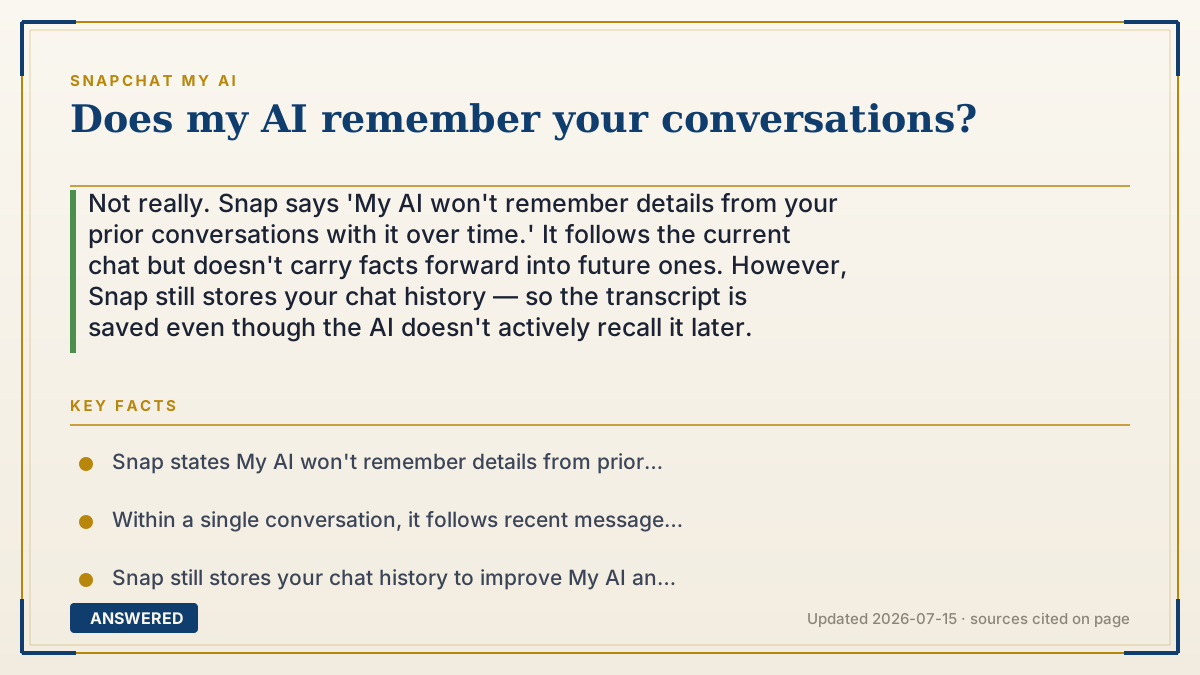
Not really. Snap says 'My AI won't remember details from your prior conversations with it over time.' It follows the current chat but doesn't carry facts forward into future ones. However, Snap still stores your chat history — so the transcript is saved even though the AI doesn't actively recall it later.
Why — the first-principles explanation
There's a difference between an AI remembering and a company storing. On the AI side, Snap is clear: 'My AI won't remember details from your prior conversations with it over time.' So if you tell it your dog's name today, it won't spontaneously bring that up next week — each new conversation starts fresh in terms of what the model actively uses.
Why? Language models work from a limited 'context window' — the recent messages in front of them. Within a single conversation, that lets My AI follow the thread and answer follow-ups. But it doesn't automatically fold every past chat into that window, so it isn't building a long-term profile of you the way a friend's memory would.
The part that trips people up is storage. Snap says stored conversations 'help us improve My AI and keep your chat history available to you.' In other words, the transcript is saved on Snap's servers even though the AI doesn't consciously recall it in a new chat. So your history isn't gone — it's just not being actively remembered by the bot. If you want it removed, use 'Clear My AI Data,' which can take up to 30 days.
An example that makes it click
Think of a hotel concierge who helps you brilliantly during your stay, remembering your dinner preference all week. But when you check out and come back months later, they greet you like a stranger — they don't carry your details forward. That's My AI: sharp within a conversation, blank slate on the next one.
Meanwhile, the hotel's front desk still keeps a record of your past visits in a filing cabinet. The concierge isn't using it, but it exists. That filing cabinet is Snap's stored chat history.
Key facts
- Snap states My AI won't remember details from prior conversations over time.
- Within a single conversation, it follows recent messages to answer follow-ups.
- Snap still stores your chat history to improve My AI and keep it available to you.
- The AI not remembering is separate from Snap saving the transcript on its servers.
- You can erase stored history with Clear My AI Data (up to 30 days to process).
▶ The 60-second explainer (script)
Does My AI remember your conversations? Mostly no — and there's an important nuance here. Snapchat says directly that My AI won't remember details from your prior conversations over time. So if you tell it something today, it won't bring that up on its own in a new chat next week. That's because AI language models work from a short window of recent messages. Within one conversation, that lets My AI follow along and answer your follow-up questions. But it doesn't automatically pull every past chat into that window, so it isn't quietly building a profile of you. Here's the catch, though. The AI not remembering is different from Snapchat not saving. Snap does store your chat history — to improve My AI and to keep it available to you. So the transcript is saved on their servers even if the bot doesn't actively recall it. Want it gone? Use Clear My AI Data in settings — that can take up to 30 days.
What authoritative sources say
People also ask
Will My AI recall what I told it yesterday?
It won't actively bring forward details from past conversations. Snap says My AI doesn't remember prior chats over time.
So is my chat history deleted automatically?
No. The AI not remembering is separate from storage. Snap saves your transcript until you delete it via Clear My AI Data.
Does it remember things within one conversation?
Yes. Within a single chat it follows recent messages so it can answer follow-up questions in context.