How do AI search optimization tools increase organic traffic?
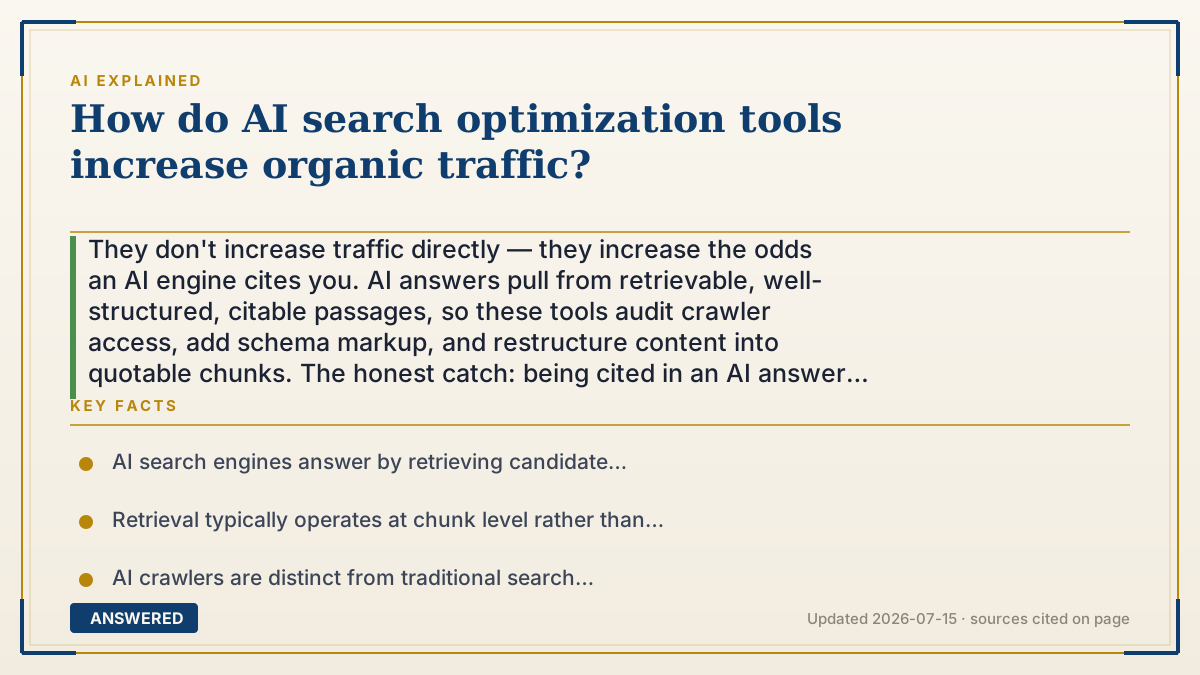
They don't increase traffic directly — they increase the odds an AI engine cites you. AI answers pull from retrievable, well-structured, citable passages, so these tools audit crawler access, add schema markup, and restructure content into quotable chunks. The honest catch: being cited in an AI answer often produces a mention without a click.
Why — the first-principles explanation
To judge these tools you have to understand what changed in the retrieval pipeline, because that's the only thing they can actually influence.
Classic SEO optimized for a ranked list. Google returned ten links; your job was to be link one, and the click followed almost automatically. AI search breaks that in two. When ChatGPT, Perplexity, or an AI Overview answers a question, it typically retrieves a set of candidate documents, then synthesizes a single answer, citing a few sources. You're no longer competing for a rank position. You're competing to be retrieved and then quoted.
That difference drives everything these tools do. Retrieval is usually chunk-level, not page-level: the system pulls passages, not whole documents. So a page that buries its answer in paragraph nine, after a personal anecdote and a history lesson, may never surface — not because the answer is wrong, but because no single chunk contains it cleanly. The tools respond by restructuring content into self-contained, quotable passages: a direct answer near the top, one claim per paragraph, real numbers with units and dates, headings phrased as the questions people actually ask.
Then there's the plumbing, which is genuinely mechanical and where these tools earn their keep. AI crawlers are separate from Googlebot, and many sites accidentally block them in robots.txt while wondering why they never get cited. Structured data — schema.org JSON-LD — helps machines parse what an entity, price, or date actually is rather than inferring it from layout. Emerging conventions like llms.txt try to describe site structure to AI systems directly. None of this is magic; it's making your content mechanically legible to a program that never renders your CSS.
Now the part most vendors skip. Citation is not a click. In a ranked list, the answer lived on your page, so getting found meant getting visited. In AI search, the answer is assembled in the chat window, and your contribution may appear as a footnote the user never opens. You can win retrieval, win the citation, and see your traffic fall anyway — because the user's need was met before they reached you. That's not a failure of the tools; it's the shape of the medium.
So the realistic claim is narrow and worth stating plainly: these tools improve your probability of being retrieved and cited. They cannot make an AI engine send traffic it has no reason to send. The sites that hold up are the ones with something an answer engine can't synthesize away — original data, real expertise, a reason to click through.
An example that makes it click
Imagine a librarian who answers questions at the desk instead of pointing you to a shelf.
Old search: you ask about penguins, she hands you ten books, you take one home. The book got "traffic" because reading it was the only way to get the answer.
New search: you ask about penguins, and she says, "They can dive about 500 meters — that's from the Antarctic survey, third shelf." You say thanks and leave. The survey got cited. It got no reader.
AI search optimization tools are about being the book she reaches for: clearly labeled, with the fact on a page she can read aloud in one breath, and — critically — not locked in a cabinet she doesn't have a key to. That last one is robots.txt, and it's the one that quietly ruins sites.
But notice what the tools can't fix. They can get you quoted. They can't make the visitor walk to the third shelf.
How to do it
- Check AI crawler access first. Audit robots.txt, meta tags, and HTTP headers — AI crawlers are separate from Googlebot, and blocking them is the most common self-inflicted wound.
- Answer the question in the first 40-60 words of the page, self-contained. Retrieval is chunk-level: if no single passage contains the answer, no passage gets quoted.
- Restructure into quotable chunks: one claim per paragraph, headings phrased as real questions, numbers with units and dates attached.
- Add schema.org JSON-LD structured data so machines can parse entities, prices, dates, and authorship instead of guessing from your layout.
- Consider an llms.txt file — an emerging convention for describing site structure to AI systems directly.
- Cite your own sources and show authorship. Answer engines favor content that looks verifiable, and E-E-A-T signals still matter for what gets retrieved.
- Measure mentions, not just sessions. Track whether AI engines cite you at all — traffic alone will understate your visibility in a medium where the answer is delivered in the chat window.
- Build what can't be synthesized: original data, proprietary research, tools, real expertise. That's the only durable reason a user clicks past the answer.
Key facts
- AI search engines answer by retrieving candidate passages and synthesizing a single response with a few citations — replacing competition for rank position with competition for retrieval and quotation.
- Retrieval typically operates at chunk level rather than page level, so content whose answer isn't contained in a single self-contained passage may never surface.
- AI crawlers are distinct from traditional search crawlers; robots.txt, meta tags, and HTTP headers can block them independently of Googlebot.
- schema.org JSON-LD structured data lets machines parse entities, dates, prices, and authorship rather than inferring them from page layout.
- llms.txt is an emerging convention for describing website structure and content to AI systems.
- Being cited in an AI-generated answer does not guarantee a visit — the answer is assembled in the chat interface, so a citation can produce a mention with no click.
▶ The 60-second explainer (script)
How do AI search optimization tools increase organic traffic? Let's be precise, because the honest answer is narrower than the pitch. They don't increase traffic directly. They increase the odds an AI engine retrieves and cites you. Here's what changed. Classic SEO optimized for a ranked list. Google gave you ten links, your job was to be link one, and the click followed automatically — because the answer lived on your page. Reading you was the only way to get it. AI search breaks that in two steps. When ChatGPT or Perplexity or an AI Overview answers, it retrieves candidate documents, then synthesizes one answer and cites a few sources. So you're not competing for a rank anymore. You're competing to be retrieved, and then quoted. And that drives everything these tools do. Retrieval is chunk-level, not page-level — it pulls passages, not whole documents. So a page that buries the answer in paragraph nine after a personal anecdote may never surface. Not because it's wrong, but because no single chunk contains it cleanly. So the tools restructure: direct answer near the top, one claim per paragraph, real numbers with units and dates, headings phrased as actual questions. Then there's the plumbing, and this is where they genuinely earn their fee. AI crawlers are separate from Googlebot, and plenty of sites block them in robots.txt while wondering why they're never cited. Schema markup lets machines parse what a price or a date actually is instead of guessing from your layout. Now here's what most vendors skip. Citation is not a click. Think of a librarian who used to hand you ten books — the book got read because that's how you got the answer. Now she just says 'penguins dive about 500 meters, that's the Antarctic survey, third shelf.' The survey got cited. It got no reader. You can win retrieval, win the citation, and watch your traffic fall — because the user's need was met before they reached you. That's not a tool failure. That's the medium. So: these tools raise your probability of being retrieved and quoted. They can't make an engine send traffic it has no reason to send. The sites that survive have something an answer can't synthesize away — original data, real expertise, a reason to click.
What authoritative sources say
People also ask
Will AI search optimization actually get me more visitors?
Sometimes, but that's not what it directly buys. It raises your odds of being retrieved and cited. Because AI answers are delivered in the chat window, a citation can produce a mention with no click at all.
What's the single highest-impact fix?
Check whether you're blocking AI crawlers. They're separate from Googlebot, and robots.txt, meta tags, or headers can shut them out silently while your traditional SEO looks fine.
Why does content structure matter so much for AI search?
Because retrieval works on chunks, not pages. If the answer is buried in paragraph nine, no single passage contains it cleanly, so nothing quotable gets pulled — regardless of how good the page is.
Is schema markup or llms.txt required?
Neither is mandatory. Schema.org JSON-LD helps machines parse entities and dates rather than infer them from layout; llms.txt is an emerging convention for describing site structure to AI systems.
What kind of content still earns clicks in AI search?
Things an answer engine can't synthesize away — original data, proprietary research, interactive tools, and genuine expertise. If your page only restates common knowledge, the AI will restate it for you.