Is voice.AI safe?
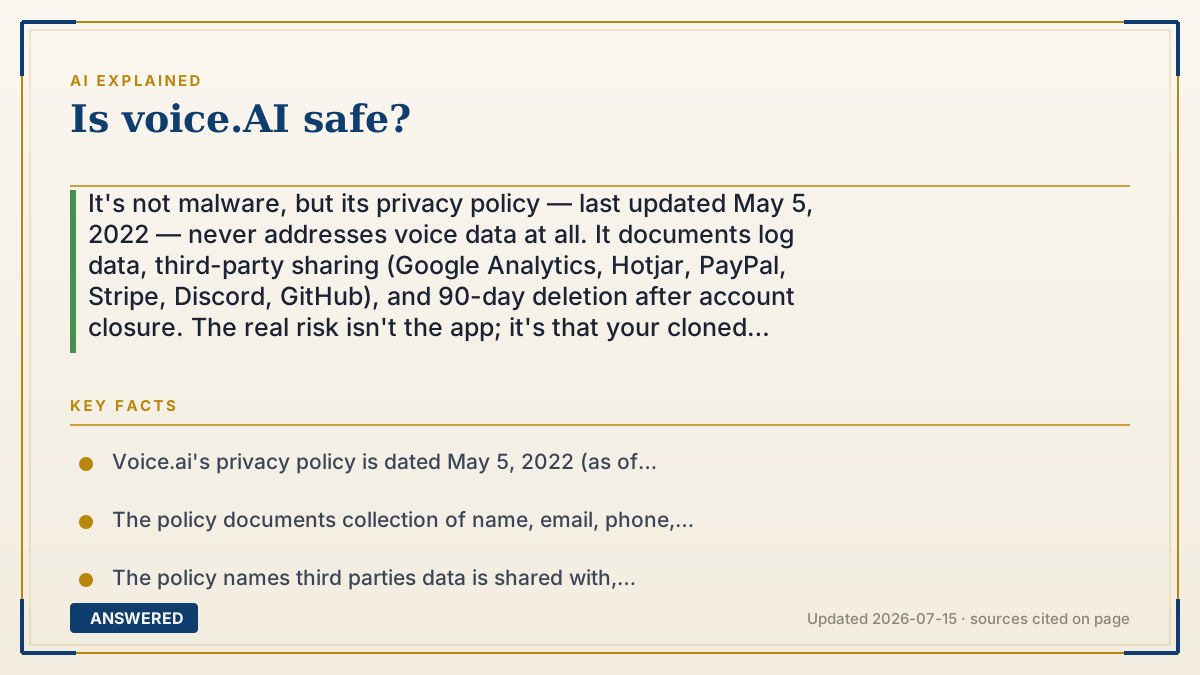
It's not malware, but its privacy policy — last updated May 5, 2022 — never addresses voice data at all. It documents log data, third-party sharing (Google Analytics, Hotjar, PayPal, Stripe, Discord, GitHub), and 90-day deletion after account closure. The real risk isn't the app; it's that your cloned voice can outlive your use of it.
Why — the first-principles explanation
Split "safe" into three questions, because they have three different answers.
Is the software malicious? No evidence of that. It's a real product from a real company with normal payment processors. It's a desktop app that installs an audio driver so it can sit between your microphone and Discord or a game — that's an invasive-looking install, but it's what any voice changer must do. Users commonly report heavy GPU load and crashes in live mode, which is a performance complaint, not a security one.
Is your data handled well? Here the honest answer is: the policy doesn't say. Voice.ai's privacy policy is dated May 5, 2022, and it reads like a generic template. It covers name, email, phone, address, log data (IP, browser, pages visited), device data, and user-generated content. It names third parties it shares with — Google Analytics, Hotjar, SendinBlue, PayPal, Stripe, Discord, GitHub. It says retention is "only for as long as we need to," and that personal information is deleted within 90 days of account deletion. What it contains no disclosure about is voice data specifically, or training AI models on user voices. For a company whose entire product is voice, a policy that never mentions voice is the finding. It isn't proof of misuse — it's an absence of commitment, which is different from a promise and worse than one.
Is the thing you're making safe to exist? This is the question people skip and the one that matters. A voice model is a durable key to your identity. Your face is public; your voice is treated as authentication by banks, by your family, by your employer. Voice-cloning scams — a call from a relative in trouble — work because of this. Once you upload enough clean audio to build a model of your voice, that model can be copied, leaked, breached, or shared. You cannot rotate your voice like a password. Any platform hosting a library of user-contributed voices creates the same structural risk regardless of the company's intentions.
So the practical rule isn't "avoid this app." It's: assume anything you upload could become public, permanently. Under that assumption, using a voice changer for gaming is fine. Uploading a long clean sample of your own voice — or a family member's — to any service is a decision you can't undo.
An example that makes it click
Think of the difference between wearing a mask and giving someone your fingerprints.
Wearing a mask at a party is harmless fun — that's using a voice changer on Discord. Nothing about you leaves.
But if the mask shop asks you to press your thumb on a pad first "so we can make it fit better," that's a different transaction. The mask is fun. The thumbprint is forever. And if the shop gets robbed, the mask isn't what's stolen.
Your voice is a thumbprint. Your bank thinks so. Your mother thinks so. The app's privacy policy — written in 2022 — doesn't mention thumbprints at all.
How to do it
- Read the actual policy date before trusting it. Voice.ai's is dated May 5, 2022, and does not address voice data or model training.
- Decide which mode you need. Transforming your voice into someone else's preset is low risk. Uploading samples to clone a voice is the risky part.
- Never upload a clean sample of your real voice unless you accept it may become permanent and public.
- Never upload anyone else's voice without consent — a family member, a coworker, a streamer. Consent aside, this is what makes impersonation scams work.
- Skip any opt-in model training program unless you're fine with your voice being usable by strangers.
- Use a throwaway email and a payment method you can dispute. Assume marketing data sharing, since the policy permits it.
- Set up a spoken code word with your family for phone calls asking for money or help. This is the real defense against voice cloning, and it's free.
- If you leave, request deletion explicitly. The policy states personal information is deleted within 90 days of account deletion — that's a request you have to make.
Key facts
- Voice.ai's privacy policy is dated May 5, 2022 (as of 2026-07) and contains no disclosure about voice data handling or training AI models on user voices.
- The policy documents collection of name, email, phone, address, log data (IP address, browser type and version, pages visited), device data, user-generated content, and transaction data.
- The policy names third parties data is shared with, including Google Analytics, Hotjar, SendinBlue, PayPal, Stripe, Discord, and GitHub.
- The policy states personal information is retained 'only for as long as we need to,' is deleted within 90 days of account deletion, and users may request deletion at any time subject to legal-compliance exceptions.
- Voice.ai is a desktop application that installs an audio driver to route microphone input in real time; users commonly report high GPU usage in live mode.
- A cloned voice model cannot be revoked or rotated the way a password can — the risk persists after you stop using the service.
▶ The 60-second explainer (script)
Is Voice dot AI safe? Split that into three questions, because they have three different answers. One: is it malware? No evidence of it. It's a real product with normal payment processors. It installs an audio driver so it can sit between your microphone and Discord — that looks invasive, but every voice changer must do that. People report crashes and heavy GPU use. That's a performance complaint, not a security one. Two: is your data handled well? Here's the honest answer — the policy doesn't say. Voice.ai's privacy policy is dated May fifth, 2022, and reads like a template. It covers your name, email, IP address, browser, what pages you visited. It names who it shares with — Google Analytics, Hotjar, PayPal, Stripe, Discord, GitHub. It says data is deleted within ninety days of closing your account. And it contains nothing — nothing — about voice data or training models on user voices. For a company whose entire product is voice, a policy that never mentions voice is the finding. That's not proof of misuse. It's an absence of a promise, which is worse than a promise. Three, and this is the one people skip: is the thing you're making safe to exist? Your voice is treated as authentication — by your bank, by your mother. Voice cloning scams work for exactly that reason. And you cannot rotate your voice like a password. Wearing a mask at a party is harmless fun. But if the mask shop asks for your thumbprint first so it fits better — that's a different transaction. The mask is fun. The thumbprint is forever. So: use it for gaming, sure. Don't upload a clean sample of your real voice. And go set up a code word with your family tonight. That's free, and it's the actual defense.
What authoritative sources say
People also ask
Is Voice.ai a virus?
No. It's a legitimate desktop app. It installs an audio driver to route your microphone in real time, which looks alarming to antivirus software but is required for any voice changer to work.
Does Voice.ai keep my voice recordings?
The privacy policy, dated May 5, 2022, doesn't say — it contains no disclosure specific to voice data. That silence is the problem: it's an absence of commitment rather than a denial.
Can someone steal my voice from it?
Any service holding a model of your voice creates that risk through breach, leak, or sharing, regardless of intent. The defining problem is that you cannot change your voice the way you change a password.
Is it safe to use for gaming and Discord?
Using a preset voice to transform your speech in real time is low risk. The risk concentrates in uploading clean samples of a real person's voice — yours or anyone else's.
How do I protect my family from voice cloning scams?
Agree on a spoken code word for any call asking for money or urgent help, and call back on a known number. It costs nothing and defeats the entire attack.