What copyright-related questions will Google AI not answer?
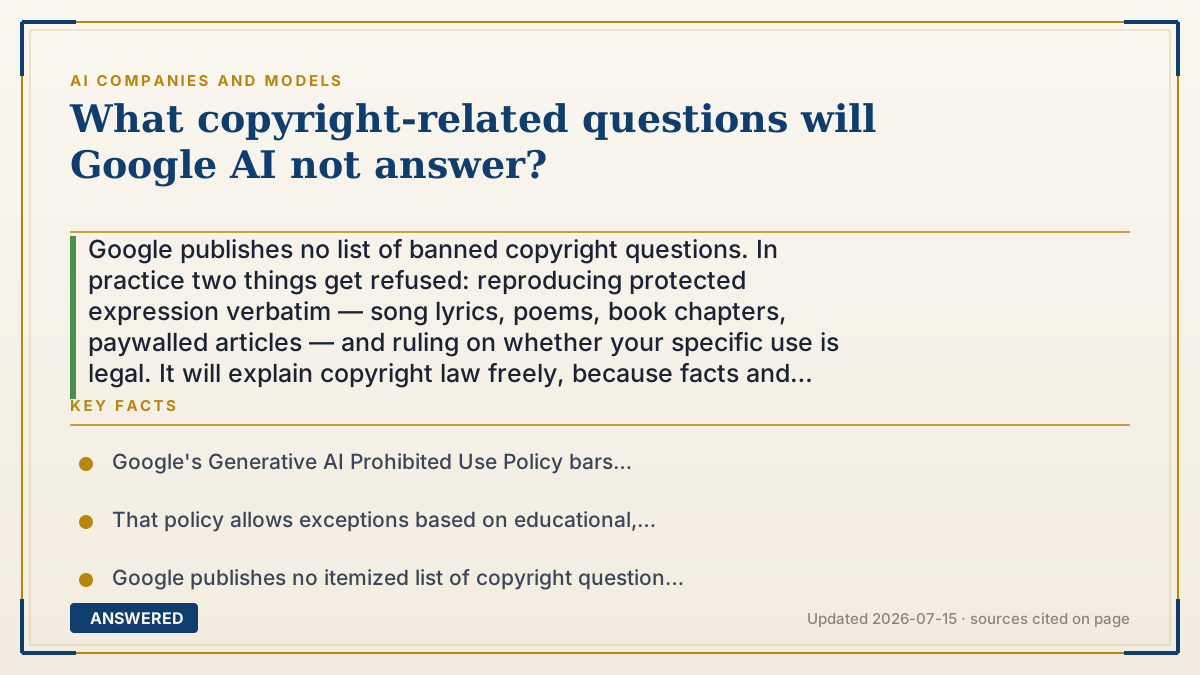
Google publishes no list of banned copyright questions. In practice two things get refused: reproducing protected expression verbatim — song lyrics, poems, book chapters, paywalled articles — and ruling on whether your specific use is legal. It will explain copyright law freely, because facts and ideas aren't copyrightable. Refusals are inconsistent and change.
Why — the first-principles explanation
The single most useful thing to understand: "copyright questions" is really two different problems, and Google's AI treats them completely differently.
The first is a copying problem. Copyright protects expression — the specific words, notes, and images someone chose — not the facts or ideas inside them. That distinction explains almost everything you'll observe. Ask for a plot summary of a novel and you'll get it, because plot facts aren't protected. Ask for the actual text of chapter one and you'll usually hit a wall, because that text is the protected thing. Same with music: it will happily tell you what a song is about, who wrote it, and what year it charted, and then decline to print the lyrics. Google's Generative AI Prohibited Use Policy backs this up in general terms — it bars using the tools to generate content that violates the rights of others, including intellectual property rights. The company also has an obvious self-interested reason: reproducing a publisher's text at scale is the exact behavior that generates lawsuits and blows up licensing deals.
The second is an advice problem, and it's why people get frustrated. "Can I use this song in my YouTube video?" is not a fact question. Fair use in the US is a four-factor balancing test — purpose and character of the use, nature of the work, amount and substantiality taken, and effect on the market — decided case by case by courts. There is no lookup table. Even the US Copyright Office itself refuses to answer this: it states plainly that it cannot provide specific legal advice to individual members of the public about questions of fair use. When Google's AI hedges into "this isn't legal advice, consult an attorney," it is being more accurate than the confident blog post ranking above it, not less.
Here's the honest part that other pages won't tell you. Google does not publish a specific list of copyright questions its AI won't answer. These refusals are model behavior shaped by training, safety layers, and legal exposure — not a documented rule you can look up and appeal. That means they are inconsistent: the same request can be refused in the Gemini app and answered in AI Mode, refused today and answered next month, refused for one song and answered for another. Anyone showing you a definitive list is describing a snapshot of behavior, not a policy. The one part that is written down — the Prohibited Use Policy — is broad, mentions IP rights only briefly, and even allows exceptions where educational, documentary, scientific, or artistic value outweighs the harm.
An example that makes it click
Think of a museum guide. Ask her "what's this painting about, who painted it, why is it famous?" and she'll talk for twenty minutes. Ask her to make you a pixel-perfect copy of the canvas to hang in your restaurant, and she stops — not because the question is rude, but because copying the thing is the whole point of the rules she works under. The facts about the painting are free. The painting is not.
Now ask her a third question: "is it legal for me to put this image on my coffee mugs?" She goes quiet — and she's right to. That answer depends on how much you used, whether you changed it, whether you're selling it, and whether you're eating the artist's lunch. She's a guide, not your lawyer, and a wrong yes costs you money. Google's AI is doing both of those moves: free with facts, tight with the canvas, hedged on your mugs.
Key facts
- Google's Generative AI Prohibited Use Policy bars generating content that 'Violates the rights of others, including privacy and intellectual property rights' — the only written IP rule, and it is broad rather than copyright-specific.
- That policy allows exceptions based on educational, documentary, scientific, or artistic considerations where benefits outweigh harms.
- Google publishes no itemized list of copyright questions its AI will refuse; refusals are model behavior and vary by product surface and over time.
- US fair use is a four-factor test under Section 107 of the Copyright Act: purpose and character, nature of the work, amount and substantiality, and effect on the market.
- The US Copyright Office states it is 'unable to provide specific legal advice to individual members of the public about questions of fair use' — so no automated tool can either.
- Copyright protects creative expression, not facts or ideas — which is why summaries are answered and verbatim text is refused.
▶ The 60-second explainer (script)
People keep asking what copyright questions Google's AI won't answer. Here's the honest answer: there is no published list. Google has never released one. What exists is a pattern, and the pattern makes sense once you see the split. Copyright protects expression — the actual words someone wrote — not the facts about them. So Google's AI will cheerfully tell you what a song is about, who wrote it, what year it came out, what fair use means, and all four fair use factors. Then you ask it to print the lyrics, and it stops. Same with book chapters and paywalled articles. Facts are free, the canvas is not. The second thing it dodges is different. Ask 'can I use this clip in my video' and it hedges into consult-a-lawyer territory. That's not the AI being lazy. Fair use is a four-factor balancing test decided case by case, and the US Copyright Office itself says flat out it cannot give you specific legal advice on fair use. If the government office that runs copyright won't call your case, a chatbot guessing would be worse, not better. And one more thing worth knowing — these refusals are inconsistent. Same question, different Google product, different answer. Different week, different answer. It's model behavior, not a rulebook. So anyone selling you the definitive list is describing weather, not climate.
What authoritative sources say
People also ask
Why won't Google AI give me song lyrics?
Lyrics are protected creative expression, and reproducing them in full is the kind of copying that triggers infringement claims and breaks licensing arrangements. Facts about the song aren't protected, which is why it will discuss the song but not print it.
Will Google AI tell me if my use is fair use?
Generally no, and that restraint is correct. Fair use is a four-factor, case-by-case test that courts decide; even the US Copyright Office declines to rule on individual situations.
Is there an official list of blocked copyright questions?
No. Google publishes a broad Prohibited Use Policy mentioning intellectual property rights, but no itemized list of refused questions. Observed refusals are model behavior that shifts over time.
Why does it answer sometimes and refuse other times?
Because refusals come from model behavior and safety layers rather than a fixed rule, the same request can succeed in one Google product and fail in another, or change from month to month.
Can I use Google's AI output commercially without copyright risk?
That's a separate question with real unsettled law around authorship and infringement, and it depends on your jurisdiction and what the output resembles. For anything with money attached, get an attorney rather than a chatbot.