What is Google Gemini?
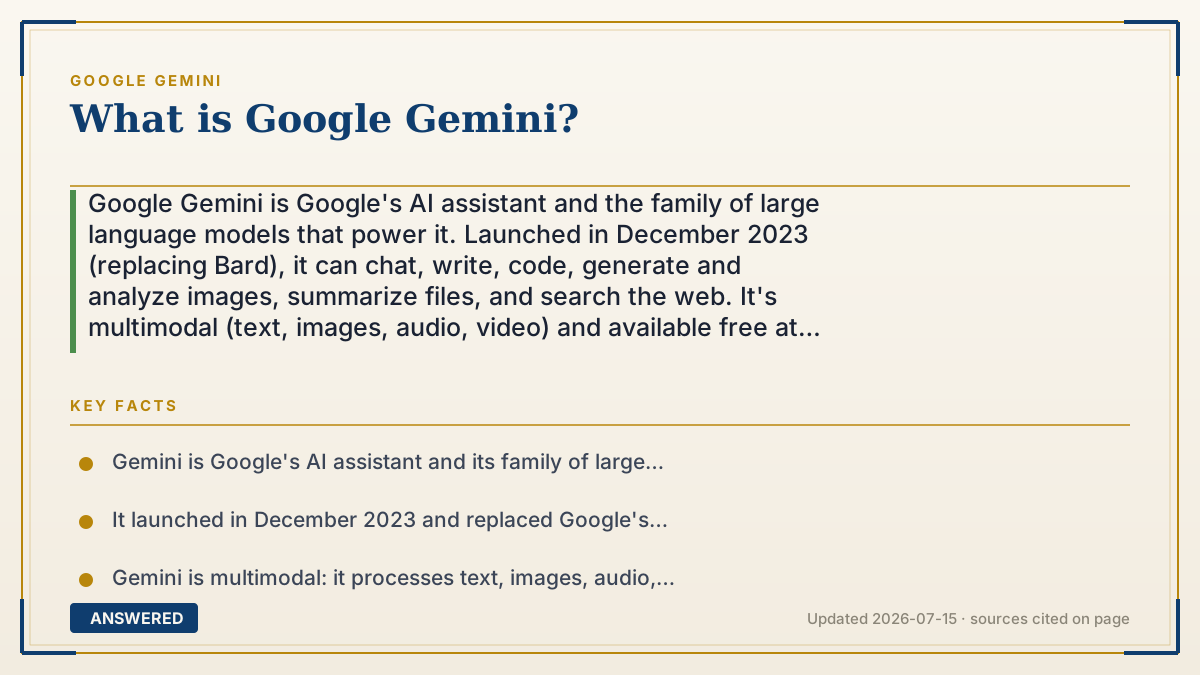
Google Gemini is Google's AI assistant and the family of large language models that power it. Launched in December 2023 (replacing Bard), it can chat, write, code, generate and analyze images, summarize files, and search the web. It's multimodal (text, images, audio, video) and available free at gemini.google.com and via Android and iOS apps.
Why — the first-principles explanation
At its core, Gemini is a large language model: a program trained on a massive amount of text and other data to predict what words, pixels, or sounds should come next. That prediction skill, scaled up enormously, is what lets it answer questions, write essays, and hold a conversation. It isn't looking up canned answers; it's generating them on the fly from learned patterns.
What makes Gemini distinct is that it was built multimodal from the start — it understands not just text but images, audio, and video together. So you can show it a photo, play it a sound, or paste a document, and it processes them in one shared "brain" rather than bolting on separate tools. This is why it can describe a picture, read a chart, or summarize a video.
The word "Gemini" refers to two things at once: the models (Gemini Flash, Pro, and Ultra tiers) and the consumer app/assistant that uses them. Google folded its earlier Bard chatbot into Gemini in 2024 and now weaves it through Search, Android, and Workspace, so "Gemini" is both the engine and the product you talk to.
An example that makes it click
Think of Gemini as a super-intern who has read a giant chunk of the internet and can also see and hear. Hand this intern a typed question, a photo of your fridge, or a PDF report, and they'll respond appropriately — a written answer, a recipe from the ingredients they spotted, or a one-page summary. The intern doesn't memorize exact pages; they've absorbed patterns from millions of examples, so they can improvise a sensible reply to almost anything you throw at them, in words or pictures.
Key facts
- Gemini is Google's AI assistant and its family of large language models, spanning Flash, Pro, and Ultra tiers.
- It launched in December 2023 and replaced Google's earlier Bard chatbot in 2024.
- Gemini is multimodal: it processes text, images, audio, and video in one model.
- It's available free at gemini.google.com and via apps for Android and iOS, with paid tiers from $7.99/month.
- Gemini is integrated across Google products including Search, Android, and Workspace (as of 2026-07).
Open the official product site and confirm the current access, plans and terms.
▶ The 60-second explainer (script)
What is Google Gemini? It's Google's AI assistant, and also the name of the family of AI models that power it. Launched in December 2023, it replaced Google's older Bard chatbot. Here's what makes it special: it's multimodal, meaning it understands text, images, audio, and video all in one system. So you can type a question, show it a photo, or upload a PDF, and it responds. Gemini can chat, write, code, generate images, and search the web. It comes in different sizes, from fast Flash models to powerful Ultra ones. You can use it free at gemini.google.com or in the app on Android and iPhone, and it's built into Google Search, Android, and Workspace.
What authoritative sources say
People also ask
Is Gemini the same as Bard?
Gemini replaced Bard. Google rebranded Bard as Gemini in 2024, so they're the same product line with a new name and better models.
What can Gemini do?
It can chat, write, code, summarize files, search the web, and generate and analyze images, audio, and video.
Is Gemini a chatbot or a model?
Both. 'Gemini' names the underlying AI models and the consumer app/assistant that runs on them.
Who makes Gemini?
Google (specifically Google DeepMind and Google) develops and operates Gemini.