Why can schools use AI but students can't use it?
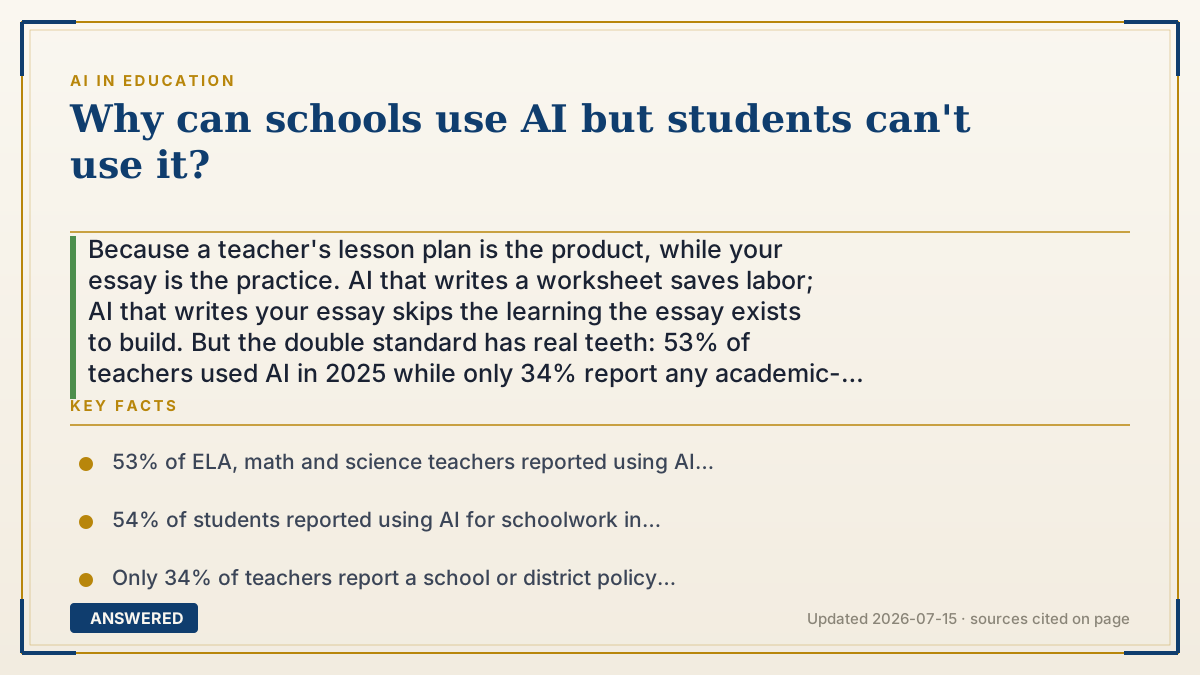
Because a teacher's lesson plan is the product, while your essay is the practice. AI that writes a worksheet saves labor; AI that writes your essay skips the learning the essay exists to build. But the double standard has real teeth: 53% of teachers used AI in 2025 while only 34% report any academic-integrity policy telling students what's allowed.
Why — the first-principles explanation
The distinction that justifies the asymmetry is what is being evaluated. When a teacher generates a rubric or a set of practice problems, the rubric is the goal. Nobody grades the teacher on having personally typed it, and the document is just as useful either way. When you turn in an essay, the school does not want the essay. It has millions of essays. It wants evidence that you can build an argument. Outsource the production and you have destroyed the only thing the assignment was for — like hiring someone to run laps for you and then wondering why you're not fitter.
There's a second, less discussed reason: accountability. A teacher who uses AI stays professionally responsible for what comes out. They review it, they sign off, and if the worksheet is wrong it's their problem. A student submitting AI text as their own is making a factual claim about authorship — that this is evidence of what you can do. The teacher's use has a human answerable for it. The undisclosed student use removes the very thing being certified.
But the grievance is legitimate, and it isn't really about that distinction. RAND's 2025 surveys found 53% of teachers using AI for planning and teaching, and 54% of students using it for schoolwork — nearly identical adoption. The difference isn't who uses AI. It's that only 34% of teachers report a school or district policy on AI and academic integrity, and only 22% describe that policy as clear. Only 19% of students say a teacher ever taught them how to use AI for schoolwork. So students are being held to rules that were never written down, enforced unevenly, and often adjudicated after the fact by detection software that is genuinely unreliable.
That's the real complaint, and it's a fair one. It isn't hypocrisy about the principle — it's the absence of a stated rule. The evidence that this is what stings: 51% of students say they worry about being accused of AI cheating even when they didn't cheat. You can't feel that way about a rule you understand. You feel that way about a rule you have to guess at.
An example that makes it click
Picture a weight room. The staff use a forklift to move the loaded plates into position before class. Nobody objects — the point was never for a human to carry plates across a room, it was to have the weights in the right place.
You can't use the forklift to do your bench press. Same bar, same plates, completely different purpose: the reps are the product. Now add the part that makes people angry. Suppose the gym never posted any rule about forklifts, never mentioned it at orientation, and then suspended a member who used one to re-rack. The member would be right to be furious — not because the rule is wrong, but because nobody told them it existed. That's where schools are: the principle is defensible, the rulebook is missing.
Key facts
- 53% of ELA, math and science teachers reported using AI for instructional planning or teaching, with about 13% using it weekly (RAND, 8,601 teachers surveyed April-June 2025)
- 54% of students reported using AI for schoolwork in winter 2025, including 61% of high schoolers — nearly identical adoption to teachers
- Only 34% of teachers report a school or district policy on AI related to academic integrity; only 22% describe it as clear and comprehensive
- Only 19% of students said their teachers gave them guidance on how to use AI for schoolwork — meaning over 80% were never taught the rules
- 51% of students said they worried about being accused of cheating with AI even if they didn't; 16% either knew someone falsely accused or had been falsely accused themselves
- 61% of parents but only 22% of district leaders agreed that greater AI use will harm critical-thinking skills
Choosing an AI tool for study?
The answer above explains the concept; this next step helps you choose by job, limits and current terms.
▶ The 60-second explainer (script)
Why can teachers use AI but you can't? The principle is actually defensible. A teacher's lesson plan is the product — nobody grades a teacher on having personally typed a worksheet, and the worksheet works either way. Your essay isn't the product. The school doesn't want another essay; it has millions. It wants evidence that you can think. Have a machine make it, and you've destroyed the only thing it was for. It's like paying someone to run your laps. But here's where the complaint has teeth. In 2025, fifty-three percent of teachers used AI for planning. Fifty-four percent of students used it for schoolwork. Basically identical. The difference isn't who's using AI — it's that only thirty-four percent of teachers report any policy on AI and academic integrity, and only nineteen percent of students say a teacher ever taught them how to use it. So you're being judged against a rule nobody wrote down. Fifty-one percent of students now worry about being accused of cheating when they didn't. That's not hypocrisy about the principle. It's a missing rulebook — and that's the thing to actually push your school on.
What authoritative sources say
People also ask
Isn't it hypocritical for teachers to use AI to grade my essay?
It's a fair challenge, and it's different from lesson planning. A teacher generating a worksheet is producing a tool; a teacher using AI to assign your grade is delegating a judgment they're accountable for. Most schools that allow AI for planning still require the teacher to make the actual grading decision.
So can I use AI for anything?
Usually yes, for the parts that aren't the skill being graded — brainstorming, explaining a concept you're stuck on, checking your own draft. The problem is that only 34% of teachers report a policy saying so. Ask your teacher directly and get the answer in writing.
Why does it feel like the rules change per teacher?
Because they do. Only 22% of teachers describe their school's AI policy as clear and comprehensive, so most are improvising. That inconsistency is a real problem, not your imagination.
Are teachers allowed to use AI on anything they want?
No. Most districts that permit AI for planning still restrict it around student data, special education documents, and grading decisions — the areas where a teacher is legally or professionally accountable for the outcome.