How does AI affect student teacher relationships?
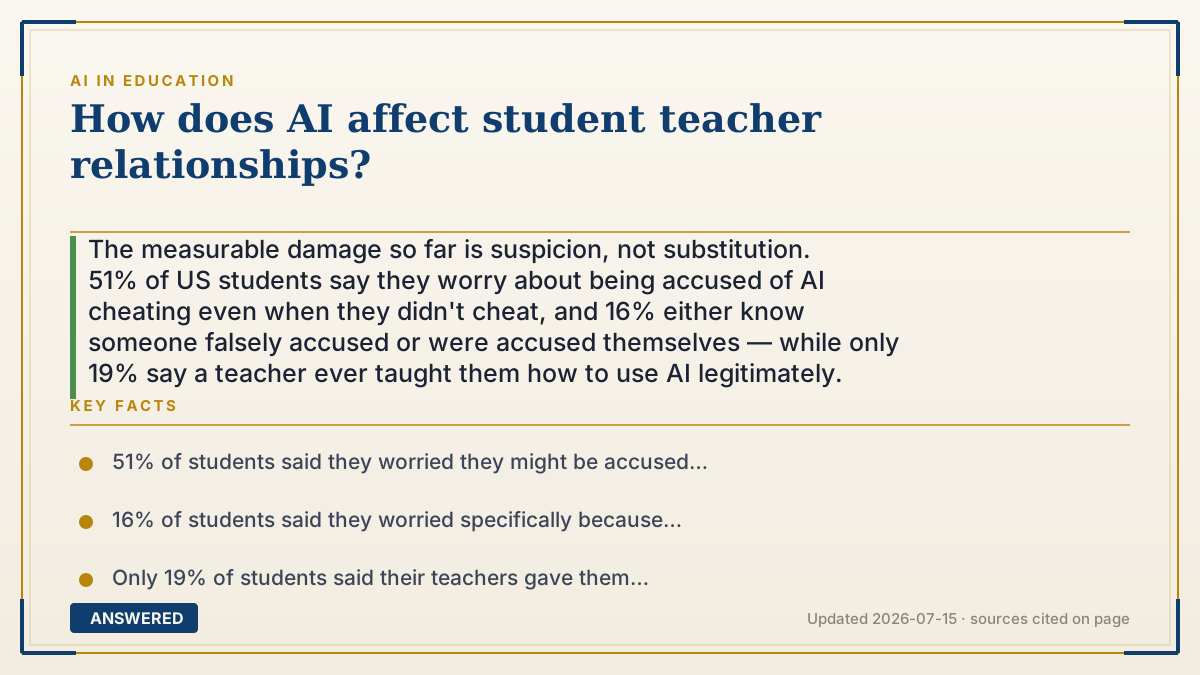
The measurable damage so far is suspicion, not substitution. 51% of US students say they worry about being accused of AI cheating even when they didn't cheat, and 16% either know someone falsely accused or were accused themselves — while only 19% say a teacher ever taught them how to use AI legitimately.
Why — the first-principles explanation
A teaching relationship runs on a mutual presumption of good faith. Grading is only tolerable because the student believes the teacher is reading their work honestly, and the teacher believes the work is the student's. AI attacks that bargain from both directions at once: the teacher can no longer take authorship for granted, and the student can no longer count on the benefit of the doubt. Trust is a shared assumption — it doesn't survive one side quietly withdrawing it.
The damage lands hardest on students who did nothing wrong, and the mechanism is worth spelling out. Once a plausible false accusation exists, the honest student's rational behavior changes. You start writing defensively. You keep receipts. You avoid the polished sentence you were proud of, because polish is what the software punishes — detectors flag predictable, fluent prose, which is why one study found 61.22% of essays by non-native English writers falsely flagged. RAND's 2025 survey found 51% of students worried about being accused of cheating with AI even if they hadn't, with 16% reporting they knew someone falsely accused or had been themselves. That is an enormous tax on a relationship, paid mostly by the innocent.
The rules vacuum makes it worse. Only 34% of teachers report a school policy on AI and academic integrity, and only 19% of students say a teacher showed them how to use AI for schoolwork. When a rule is unwritten, enforcement feels personal — like whether you get in trouble depends on whether the teacher likes you. That perception is corrosive in a way an unpopular-but-clear rule never is. And the adults writing the rules are working from a different picture of reality: district leaders estimated 46% of their students use AI when 54% actually do, and while 61% of parents and 55% of high schoolers think greater AI use will harm critical thinking, only 22% of district leaders agree. The people most worried about AI's effect on thinking are the students themselves — and the people least worried are the ones setting policy.
There's a real upside worth naming: 53% of teachers used AI for planning and grading in 2025, and the tasks it absorbs — worksheets, rubrics, first-pass feedback, report card comments — are precisely the ones that eat the hours a teacher would otherwise spend with students. Time is the raw material of a relationship. Whether that reclaimed time actually returns to students, or just gets absorbed by other demands, nobody has measured yet. Be skeptical of confident claims in either direction: what exists today is survey data on attitudes and worry, not causal evidence on relationship outcomes.
An example that makes it click
Imagine a coach who, every time you shaved a second off your time, asked whether you'd cut the course. Maybe they ask kindly. Maybe they're right once in a while. It doesn't matter — you'd still stop wanting to show them your times.
That's the shift. A teacher who opens your essay by checking your alibi isn't your reader anymore; they're an auditor. And the student's response is predictable: not to cheat, but to stop bringing their best work to someone who treats improvement as evidence.
Key facts
- 51% of students said they worried they might be accused of cheating with AI even if they didn't (RAND, 1,332 students surveyed; 462 middle school, 764 high school)
- 16% of students said they worried specifically because they knew someone who had been falsely accused of AI cheating, or had been falsely accused themselves
- Only 19% of students said their teachers gave them guidance on how to use AI for schoolwork — 14% in middle school, 21% in high school
- Only 34% of teachers report school or district policies on AI related to academic integrity; only 22% describe those policies as clear and comprehensive
- District leaders estimated that 46% of their students use AI for schoolwork; 54% of students reported actually using it — the rule-makers underestimate the reality
- 61% of parents and 55% of high schoolers agreed greater AI use will harm critical thinking, versus only 22% of district leaders
Choosing an AI tool for study?
The answer above explains the concept; this next step helps you choose by job, limits and current terms.
▶ The 60-second explainer (script)
How does AI affect the student-teacher relationship? The damage showing up in the data isn't robots replacing teachers. It's suspicion. RAND surveyed students in 2025: fifty-one percent said they worry about being accused of cheating with AI even when they didn't cheat. Sixteen percent said that worry is specific — they know someone who was falsely accused, or it happened to them. Here's why that breaks things. Teaching runs on a mutual assumption of good faith. You believe the teacher reads your work honestly; they believe the work is yours. Pull either side out and the whole thing wobbles. And once a false accusation is plausible, honest students change their behavior. You write defensively. You avoid the polished sentence — because polish is exactly what detectors punish. Sixty-one percent of essays by non-native English speakers get falsely flagged. The rules vacuum makes it worse. Only thirty-four percent of teachers report an academic-integrity policy on AI. Only nineteen percent of students were ever taught how to use it. When the rule is unwritten, enforcement feels personal — like it depends on whether the teacher likes you. And the adults are miscalibrated: district leaders guessed forty-six percent of students use AI. It's fifty-four. Sixty-one percent of parents think AI hurts thinking. Only twenty-two percent of district leaders agree. The honest bottom line: we have survey data on worry. We don't yet have good causal evidence on what this does to learning relationships long-term.
What authoritative sources say
People also ask
Does AI make teachers trust students less?
The measured effect is on students' perception: 51% now worry about false accusations. Teachers can no longer assume authorship, and that shift changes how work gets read — from a reader's posture to an auditor's.
Can AI improve the relationship instead?
Potentially. 53% of teachers use it for planning, grading and feedback — the paperwork that eats time they'd otherwise spend with students. Whether reclaimed time actually reaches students hasn't been measured yet.
Why does the lack of a policy matter so much?
Because unwritten rules feel personal. When only 34% of teachers have an academic-integrity policy and 19% of students were taught the rules, enforcement looks arbitrary — and arbitrary enforcement damages authority faster than strict rules do.
Do teachers and students see the problem the same way?
No, and the gap is striking. 55% of high schoolers think AI will harm critical thinking versus only 22% of district leaders. The students are more worried than the administrators setting the policy.